• Mind
  • Body
  • Sight
  • Hearing
  • Smell
  • Taste
  • Touch
  • Skip to primary navigation
  • Skip to main content
  • Skip to primary sidebar

Living with Scleroderma

Reflections on the Messy Complexity of Chronicity

  • Home
  • About
    • Privacy Policy
  • What Is Scleroderma?
  • Resources
  • Show Search
Hide Search

Touch

Good Fortune

Evelyn Herwitz · February 23, 2021 · Leave a Comment

If all goes according to plan, by the time you read this on Tuesday, I will be on my way to getting my first Covid vaccine dose. I have a late morning appointment at Boston Medical Center. This feels like a miracle.

Just last Thursday, Massachusetts opened up vaccination eligibility to those of us aged 65 and older. The online appointment system was not ready for the onslaught. It crashed Thursday morning.

My younger daughter in Philadelphia had stayed up past midnight to see if she could snag me an appointment, but none was to be found. Later that morning, she valiantly tried again and again to see if anything was available online, but no luck. I looked a few times, halfheartedly, but had the same experience. Demand far outstripped supply.

Not only that, but our system here is abysmal. Despite all the brilliant high tech innovators who live and work in Massachusetts, for some reason, the online portal was designed backwards. Instead of there being one centralized entry point, where you register and create your user profile, then search for appointments, you have to start with finding an appointment, then fill out all the forms, and then—and only then—if the appointment is still available, can you schedule it. At one point, my daughter got through almost all the pages of forms for an opening, only to have the system crash. This was not an uncommon experience.

My theory, which fortunately proved correct, was that I’d have my best chance of getting an appointment through my specialists at Boston Medical. The hospital was a major Covid treatment center for Boston during the big surges, and they serve a high risk urban community, so there was good reason to expect they’d get a supply. I had written my rheumatologist at the beginning of February to ask if there was any way he could help. He had actually written me back a week later, but I missed the message, only finding it late Thursday. I responded, and on Friday afternoon, got a message back from one of the nurses whom I’ve known for decades.

She informed me of a number to call to make an appointment. We had a couple more messages back and forth, and then she called me and explained that, now that I was in one of the eligible categories, because I was a BMC patient, I could schedule directly with them. Not only that, but they had just received a huge shipment of vaccines that had been delayed due to all the storms in the Midwest last week, and appointments were wide open. So, I thanked her profusely and called the number. After a short wait, I reached a scheduler who even gave me multiple options for Tuesday. Hallelujah!

I have heard stories from friends who have found their own workarounds. Several have gotten on waiting lists, expecting nothing, only to be surprised by a call a few days later about leftover doses. Others have found medical sites that were giving shots to 65+-year-olds even before that category opened up. Still others know front-line workers who will call them if there are leftover doses at day’s end.

It’s all about connections, right now. Even as I’ve worked my own, it shouldn’t have to be that way. You’d think the Powers That Be would be sure there were enough doses to meet demand before opening up a new eligible cohort of hundreds of thousands of citizens. From reports I saw, on Thursday, however, there were just 70,000 doses, which got snapped up, somehow, in-between website crashes. So those who cannot wait any longer—my social worker husband, now fully vaccinated as of Friday, thank goodness, sees clients every day  in their homes, which increases his risk and mine—must be resourceful.

As more vaccine becomes available, and, I hope, the process is streamlined, this mishegas will be just another story to tell someday about how we got through the Great Covid Pandemic. To all of you who are waiting and searching and hoping to get your vaccination soon, I wish you patience, ingenuity, persistence, and luck.

The true miracle, worth remembering, is that powerful vaccines are already available, even if the roll-out has been choppy, for avoidable reasons. For that, for getting my first dose today—and most of all, for staying clear of Covid, as far as I know, for nearly a year—I am truly grateful.

Evelyn Herwitz blogs weekly about living fully with chronic disease, the inside of baseballs, turtles and frogs, J.S. Bach, the meaning of life and whatever else she happens to be thinking about at livingwithscleroderma.com. Please view Privacy Policy here.

Image: Bianca Ackermann

Share this:

  • Share
  • Email a link to a friend (Opens in new window) Email
  • Print (Opens in new window) Print
  • Share on Facebook (Opens in new window) Facebook
  • Share on X (Opens in new window) X
  • Share on LinkedIn (Opens in new window) LinkedIn

Filed Under: Body, Hearing, Mind, Sight, Touch Tagged With: COVID-19, managing chronic disease, resilience

Tick-Tock

Evelyn Herwitz · February 9, 2021 · 1 Comment

Today’s announcement: I have entered the world of wearable health tech. This was not planned. In fact, it’s something I’ve avoided, because I didn’t want to obsess about how many steps I’ve taken each day. However, I learned some things from my heart study that made this a priority. So I am now wearing my new Apple Watch, which has already proven its worth.

Back in December and early January, as I’ve written previously, I did a three-week Holter monitor study, because my arrhythmia had been very active in recent months. And, as expected, the study validated my observations, fortunately with the reassuring news that my annoying arrhythmia is still within the normal range of abnormal, as it has been for decades. A nuisance, more than anything.

However, the study also recorded a more concerning development, one 15-second episode of a Type 2 Heart Block. There are two types of Type 2 Heart Blocks, and true to form, mine was the more complicated, which involves a blockage of certain electrical signals so they don’t transmit properly and the heart slows down. In my case, I had no symptoms of my heart rate slowing, because one part of my heart doubled the number of electrical signals it was sending, but only half of those transmitted, so the result was my normal heart rate.

This was rather disturbing news. I’ve known for years that scleroderma can cause changes to heart tissue over time. I had a long discussion with my cardiologist about this several weeks ago, and we agreed that I needed some way to keep monitoring my heart in case I do experience episodes of sudden light-headedness or dizziness going forward. This has happened to me on occasion over the years, but even though I felt weird, it was so infrequent that I just let it pass. The options were: (a) a mini portable ECG monitor that I could use to record readings and then email reports to him; (b) an Apple Watch, which has an ECG app that I could use to do the same; or (c) a small chest implant that would monitor my heart for three years.

The implant was a non-starter. The mini portable ECG was the most affordable, but a nuisance to carry with me all the time. So, I went for the watch. Fortunately, I could afford it. Not cheap, but a powerful little computer to wear on your wrist with many useful features.

I put the system to the test recently, when I got quite stressed one Friday evening when I was trying to reach Al and could not get hold of him (it all worked out, but it was one of those days). My arrhythmia kicked up big time, so after Al got home and all was well again, I took several ECG readings on my new watch. I picked the first and the last when I felt back to normal, and emailed the PDFs from my iPhone to my cardiologist with a note. Within a half hour, he wrote me back that these were the “okay” kind of extra beats, so no problem, but to keep him posted. We’re catching up again this Friday.

This was very reassuring. I’ve had no cause to send any more ECGs since then, but I am now learning to use my watch to track exercise. It’s always been clear to me that my heart feels better when I walk, but I’ve been avoiding it because of the cold weather. Now, however, I have a big incentive to get moving. And I have a very cool way to keep track of steps, exercise, calories burned, and general movement. Already, I’ve pushed myself out the door for walks that I wouldn’t have taken before all of this. I’ve tried out a fitness routine. And I do feel a little better for it all, so far.

It’s been a month of coming to terms, or, at least, beginning to come to terms with the fact that this very ornery disease still has some curve balls to throw at me. I have lived with scleroderma for nearly 40 years, now. I’ve been fortunate that my disease has always moved slowly enough for me to learn how to compensate. With the help of some amazing tech and a wonderful cardiologist, I intend to continue doing just that.

Evelyn Herwitz blogs weekly about living fully with chronic disease, the inside of baseballs, turtles and frogs, J.S. Bach, the meaning of life and whatever else she happens to be thinking about at livingwithscleroderma.com. Please view Privacy Policy here.

Share this:

  • Share
  • Email a link to a friend (Opens in new window) Email
  • Print (Opens in new window) Print
  • Share on Facebook (Opens in new window) Facebook
  • Share on X (Opens in new window) X
  • Share on LinkedIn (Opens in new window) LinkedIn

Filed Under: Body, Mind, Touch Tagged With: anxiety, Apple Watch, arrhythmia, body-mind balance, managing chronic disease, resilience

Ever Since

Evelyn Herwitz · January 12, 2021 · 2 Comments

Last Thursday afternoon I got a call from my cardiologist’s nurse. She was checking in on how I was doing with my heart study, if I’d had any issues or symptoms. So I told her that the monitor had collected plenty of data, given that my arrhythmia had been quite active at various points over recent weeks.

Especially on Wednesday, during the violent siege on our nation’s Capitol. Watching the rioters, I was horrified. I thought of my mother, now long gone, who was 10 years old in Berlin during the Reichstag Fire in February 1933 that cemented the Nazi’s rise to power.

“They’re saying it was Antifa,” the nurse told me, in a confidential tone. She began to recount the latest distortions of what we had all witnessed on live television the day before, rioters breaking into the Capitol beneath fluttering Trump banners and the Confederate flag. I tried to stop her, but she went on enthusiastically for a few minutes.

Finally, I interrupted. “No,” I said, “it was not Anitfa, it was Trump supporters who stormed the Capitol, but I don’t want to get into an argument with you about it.”

She deftly switched back to my heart study and said she would put my cardiologist on the line. I did not mention to him what she said.

But I have been thinking about it ever since.

This woman is a person with empathy. She spoke to me very kindly about my symptoms. I’m sure she’s a fine nurse. She was also spouting very dangerous rhetoric, which she clearly believes.

Words matter. Lies repeated, amplified, matter. Facts, evidence, truth, critical thinking—all matter.

So does our ability to see the humanity in each and every one of us.

I am praying for our country, for our president-elect and vice president-elect, and for a peaceful transition of power on January 20. I am praying that the maelstrom of lying and distortions will finally, finally, spin itself dry. I am praying that we can truly hear one another, seek common ground, and collaborate for the common good to solve the enormous problems facing us and the world.

After one of the darkest days in our nation’s history, let there be light.

Evelyn Herwitz blogs weekly about living fully with chronic disease, the inside of baseballs, turtles and frogs, J.S. Bach, the meaning of life and whatever else she happens to be thinking about at livingwithscleroderma.com. Please view Privacy Policy here.
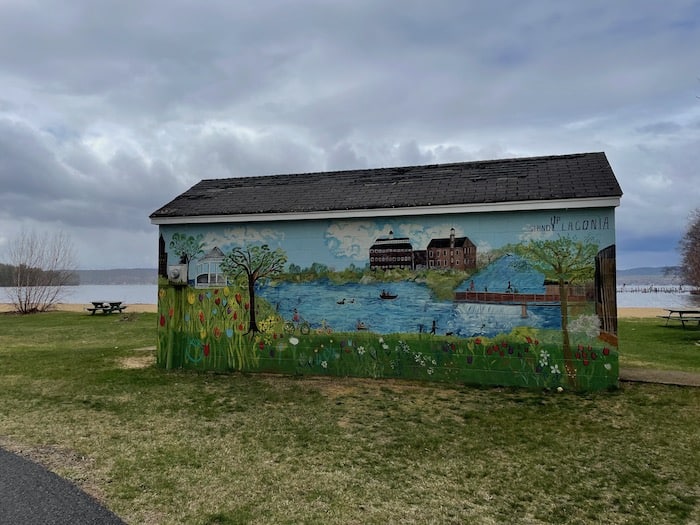
Image: Andy Feliciotti

Share this:

  • Share
  • Email a link to a friend (Opens in new window) Email
  • Print (Opens in new window) Print
  • Share on Facebook (Opens in new window) Facebook
  • Share on X (Opens in new window) X
  • Share on LinkedIn (Opens in new window) LinkedIn

Filed Under: Body, Hearing, Mind, Sight, Touch Tagged With: anxiety, arrhythmia, managing chronic disease, resilience

Disconnect

Evelyn Herwitz · January 5, 2021 · 1 Comment

Monday morning, I woke up with mild vertigo. This happens every so often. An ENT doc once explained to me that there are tiny crystals in your inner ear that can get displaced and cause the dizziness.

Or something like that. I can’t look it up, because our internet went down around 9:45. As I write, about six hours later, it has yet to come back. Our cable company’s recording says they are working to repair a damaged fiber optic cable. No estimate as to when we’ll be back online.

So, I am hoping that both my vertigo and our lost internet are just minor setbacks for the day and not bad omens for our bright, shiny New Year.

Meanwhile, I’m adapting to the day’s forced slower pace. I postponed one group Zoom meeting and held my other meeting the old fashioned way, by phone. Without emails to read and write, I drafted correspondence to send later. I’m composing this post in Pages, rather than directly into my blog, so it will be ready to cut and paste when the internet comes back.

At the same time, I feel like I’m bobbing in limbo. This sensation is not helped by the vertigo. The sun is already casting long shadows outside, and there is no update from our cable company. I trust that the internet will eventually come back on, and that my sense of balance will settle again in a day or two. But that doesn’t make the waiting any easier.

Not unlike how so many of us feel disoriented and stymied every day by the pandemic in our ability to accomplish the simplest tasks. But I could do without being caught in a microcosm today.

On the plus side, I can’t doomscroll, either. . . .

. . . Later that night:

Internet revived around 6:30 p.m. Postponed meeting was productive. And, of the 75 emails that downloaded when I regained service, only about five were worth reading. Still have some vertigo (here’s an explanation of those displaced crystals), but not too dizzy to keep me from writing. At the end of the day, that’s what matters most.

Evelyn Herwitz blogs weekly about living fully with chronic disease, the inside of baseballs, turtles and frogs, J.S. Bach, the meaning of life and whatever else she happens to be thinking about at livingwithscleroderma.com. Please view Privacy Policy here.

Image: Radvilas Seputis

Share this:

  • Share
  • Email a link to a friend (Opens in new window) Email
  • Print (Opens in new window) Print
  • Share on Facebook (Opens in new window) Facebook
  • Share on X (Opens in new window) X
  • Share on LinkedIn (Opens in new window) LinkedIn

Filed Under: Body, Hearing, Mind, Sight, Touch Tagged With: body-mind balance, managing chronic disease, resilience, vertigo

Heartfelt

Evelyn Herwitz · December 22, 2020 · 2 Comments

Years ago, early in my life with scleroderma, I developed an arrhythmia. For decades now, my heart occasionally feels like it’s skipping a beat. Actually, however, as my cardiologist has explained to me, I’m having an extra contraction. It gets worse when I’m stressed and is my orange alert to slow down, examine what’s going on, and make some adjustments in my life. It always improves with regular exercise, especially walking.

Recently, in the weeks after the November election, my arrhythmia has been more active. No surprises, I guess, because I have been very stressed about both the divisive politics plaguing our nation and the pandemic surge. But its frustrating and annoying, to say the least.

So, when I spoke with my cardiologist recently, he recommended doing a heart monitor study for up to 30 days. (Hopefully I won’t need to wear the monitor that long.) It’s probably been 35 years since I wore a Holter monitor, and I think it was maybe for only a week. Back then, the monitor was this big clunky device, the size of an old Motorola cell phone, that you wore around your neck or on a belt, connected to a bunch of wire leads attached to your body. Basically, it was a portable 24/7 EKG. You had to make notes in a notebook if you felt any symptoms, with date and time. All that information was compiled after you turned in the monitor and notes. Not fun.

Fortunately, technology has significantly advanced over the past three-plus decades. No appointment necessary to activate the device. It arrived via UPS on Friday, in a small box with the equipment and how-to instructions. Instead of a big, clunky monitor, there are two small, rechargeable monitors about 1.5 x 2.0 inches and maybe a half-inch high. You charge one while you wear the other, and the charge lasts about 12 hours. The monitor snaps into an oval foam base. On the back of the base are two snaps for removable electrode patches. So basically, you plug in the monitor, attach the electrodes, and then peel off the sticky backing from the patches and adhere to your skin. The correct positions (two alternatives) are illustrated in the guide book.

Readings collected by the monitor then feed via wireless tech to a Samsung phone that is solely for collecting the data. This, in turn, sends reports periodically to the tech company that is running the study. If you experience a symptom, you press the button on the monitor, and then the phone displays some choices to describe the symptom. You tap the appropriate description and go back to whatever you were doing. You just have to keep the phone within 10 feet; if you go out of range, the data will download when you’re close again.

Pretty amazing. And relatively easy to manage. You can’t get it wet, so you have to pause the study and remove the monitor when taking a shower or bath. I also find that my skin needs a break every 24 hours from the electrode patches, which cause a mild rash, even as I asked for the extra-sensitive skin version. So I wait about a half hour after my evening shower before reattaching everything. In the morning, I just switch out the monitors.

My cardiologist said that if I experience enough symptoms over the first week or so, I can call him and see if he can get an early version of the report, so that we can end the study. I’m hoping that will be the case. I’ve certainly recorded symptoms at least a dozen times so far. From what he tells me, it’s probably nothing serious, just an annoyance that I continue to live with. But I’m glad that we’ll have an updated baseline, at the very least.

Ironically, he also predicted that my symptoms might vanish, or at least lessen, once I have the monitor on. That was certainly true for the first 24 hours or so. How odd to have the presence of the monitor be somehow a placebo or, at least, a reassurance that I’m going to get some answers. The disconcerting experience of the extra beats, especially when they go in runs, is worse when I don’t know what it means.

Meanwhile, I’m trying to get in some walks, despite a lot of snow here in recent days and much colder temperatures. That, and trying to better manage my news diet. The winter solstice is one day past. Let there be light.

Evelyn Herwitz blogs weekly about living fully with chronic disease, the inside of baseballs, turtles and frogs, J.S. Bach, the meaning of life and whatever else she happens to be thinking about at livingwithscleroderma.com. Please view Privacy Policy here.

Image: Jude Beck

Share this:

  • Share
  • Email a link to a friend (Opens in new window) Email
  • Print (Opens in new window) Print
  • Share on Facebook (Opens in new window) Facebook
  • Share on X (Opens in new window) X
  • Share on LinkedIn (Opens in new window) LinkedIn

Filed Under: Body, Mind, Touch Tagged With: arrhythmia, managing chronic disease, mindfulness, resilience

  • « Go to Previous Page
  • Page 1
  • Interim pages omitted …
  • Page 31
  • Page 32
  • Page 33
  • Page 34
  • Page 35
  • Interim pages omitted …
  • Page 91
  • Go to Next Page »

Primary Sidebar

Subscribe via Email

Enter your email address to subscribe to Living With Scleroderma and receive new posts by email. Subscriptions are free and I never share your address.

About the Writer

When not writing about living fully with chronic health challenges, Evelyn Herwitz helps her marketing clients tell great stories about their good works. She would love to win a MacArthur grant and write fiction all day. Read More…

Blog Archive

Recent Posts

  • Down to Three
  • Wise Counsel
  • And the Winner Is . . .
  • Back to Reality
  • Best Vacation Ever

I am not a doctor . . .

. . . and don’t play one on TV. While I strive for accuracy based on my 40-plus years of living with scleroderma, none of what I write should be taken as medical advice for your specific condition.

Scleroderma manifests uniquely in each individual. Please seek expert medical care. You’ll find websites with links to medical professionals in Resources.

Copyright © 2026 · Daily Dish Pro on Genesis Framework · WordPress · Log in