• Mind
  • Body
  • Sight
  • Hearing
  • Smell
  • Taste
  • Touch
  • Skip to primary navigation
  • Skip to main content
  • Skip to primary sidebar

Living with Scleroderma

Reflections on the Messy Complexity of Chronicity

  • Home
  • About
    • Privacy Policy
  • What Is Scleroderma?
  • Resources
  • Show Search
Hide Search

Hearing

Until Next Year

Evelyn Herwitz · April 7, 2026 · 3 Comments

Last Wednesday night marked the beginning of Passover, when we always host the first seder for our extended family. Al’s first cousins always host the second seder. This is a family tradition that dates back to Al’s mother and her youngest sister, who alternated hosting the two festive meals every year, when we join Jews around the world in retelling the Exodus story.

Even though we share the meals between the two families, it’s still a lot of work. My hands were in rough shape as the holiday approached, with six fingers in bandages, due to persistent ulcers and calcium bits that had chosen just this time of year to travel up to the surface and hang around without popping out. This feels like having grains of sand stuck under your skin. No fun.

Fortunately, our younger daughter had already planned to come up from Philadelphia to help out with the cooking for three days. Yes, it takes that long, because I can’t help myself. I always plan a very special meal with lots of courses. Even when I’ve mastered all the recipes and know how to pace myself with the meal prep, it’s just a lot of work.

So, we cooked and shopped and cooked together for several days. She did the lion’s share of the chopping and mixing and frying and baking, while I directed and handled a variety of smaller details that were essential for the final meal. Here’s what we made: Egyptian charoset, which is a mixture of dates, raisins, ground nuts and sugar; hard boiled eggs; pickled salmon (a family favorite, as an appetizer); Egyptian potato soup; spinach patties; roasted carrots, beets, and turnips; a salad of oranges, avocados, red onions, arugula, and a cinnamon vinaigrette dressing; apricot sponge cake, chocolate chip meringue cookies, strawberries, grapes, and chocolate for dessert. And, of course, there was plenty of matzah, including gluten free.

It was a hit. Worth all the effort. We had fun cooking together, though I was quite tired afterwards.

Learning how to ask for and accept help is a crucial part of living with scleroderma. I’m very grateful to our daughter for being so willing to step up and keep the family tradition going. Until next year . . .

Evelyn Herwitz blogs weekly about living fully with chronic disease, the inside of baseballs, turtles and frogs, J.S. Bach, the meaning of life and whatever else she happens to be thinking about at livingwithscleroderma.com. Please view Privacy Policy here.
Share this:

  • Share
  • Email a link to a friend (Opens in new window) Email
  • Print (Opens in new window) Print
  • Share on Facebook (Opens in new window) Facebook
  • Share on X (Opens in new window) X
  • Share on LinkedIn (Opens in new window) LinkedIn

Filed Under: Body, Hearing, Mind, Sight, Smell, Taste, Touch

Olympic Interlude

Evelyn Herwitz · February 17, 2026 · 2 Comments

Nearly every night for the past 11 days, I have been reveling in the Milan Cortina Winter Olympics. Watching these amazing athletes’ extraordinary feats has been the best antidote to horrible headlines and stress. It has also helped me get through my bout with the flu and the lagging fatigue and residual, annoying cough.

I am a sucker for the whole spectacle. I feel elated when “old” athletes, who are at least half my age, triumph, as did Italy’s Federica Brignone, whose courageous comeback in the women’s giant slalom earned her gold. Honestly, her win brought tears to my eyes (to the extent I can make tears).

And my heart goes out to those who fall, like champion skier Lindsey Vonn and ice skating wonder Ilia Malinin. Vonn’s skiing career may be over (I really hope she doesn’t risk breaking her leg or shredding her ACL again), but Malinin will be one to watch in 2030. I wish him well and hope he learns from his Olympic experience to keep growing and striving for his personal best.

I will never be able to soar through the air like freestyle skier Eileen Gu, but I love watching her fly with such joy. I am inspired by the extraordinary grace and strength of ice dancers Madison Chock and Evan Bates. But what moves me the most is the sportsmanship of so many athletes from around the world, who compete so intensely and then congratulate each other so graciously.

Our world could use a lot more of that spirit. May it be so.

Evelyn Herwitz blogs weekly about living fully with chronic disease, the inside of baseballs, turtles and frogs, J.S. Bach, the meaning of life and whatever else she happens to be thinking about at livingwithscleroderma.com. Please view Privacy Policy here.
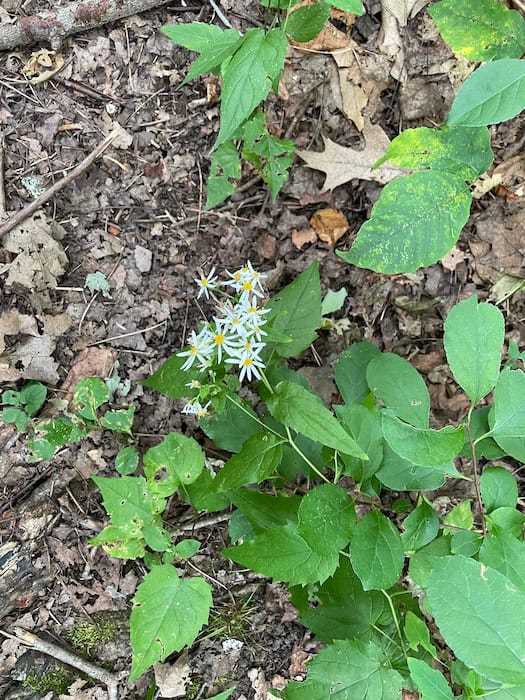
Image: Passo Falzarego, Cortina d’Ampezzo, Italy, by Marco Czollmann

Share this:

  • Share
  • Email a link to a friend (Opens in new window) Email
  • Print (Opens in new window) Print
  • Share on Facebook (Opens in new window) Facebook
  • Share on X (Opens in new window) X
  • Share on LinkedIn (Opens in new window) LinkedIn

Filed Under: Body, Hearing, Mind, Sight Tagged With: managing chronic disease, mindfulness, resilience, stress

Why Me?

Evelyn Herwitz · November 11, 2025 · 1 Comment

For all of the bad things that happened during the COVID pandemic, the one good thing that happened for me was reconnecting with old friends over Zoom. Five years ago, when we were hunkered down, I looked up friends from my teens and twenties and caught up online.

Some of us have continued those conversations, maybe once or twice a year. And this past Sunday, a bunch of old friends from my high school days shared our lives for a couple of hours. It was funny and poignant and an important touchstone for all of us, to recall where we came from and where we’ve ended up.

One of my friends, whom I haven’t seen in fifty years, shared that her sister had also had scleroderma. She died several years ago from a brain tumor, but lived with significant skin tightening for about 15 years. A number of years ago, I had also learned that the older sister of another classmate had died from very aggressive scleroderma. What are the odds that three women from the same small high school all got this rarest of diseases?

My friend on the call Sunday has wondered if the fact that our school was not far from a nuclear power plant might account for her sister’s illness and other rare autoimmune diseases that run in her family. I have wondered if the two years I spent in graduate school in Pittsburgh, living in a neighborhood on a hillside above the Jones & Laughlin Steel mill, which flushed its stacks every weekend, filling the air with the thick odor of rotten eggs, may have played a role in my disease trajectory.

Researchers still don’t know exactly what causes scleroderma, this formidable autoimmune disease that tricks the body into producing too much collagen that tightens and hardens skin and connective tissue. My rheumatologist at Boston Medical has told me the latest theories point to some kind of virus that triggers the disease process in people with certain genetic predispositions. It is not contagious, and very rare for direct family members to share the disease.

Stress also plays a role in disease onset. Research supports this, although other factors—genetic, hormonal, environmental, and immune system health—are all part of the mix. In my own case, I developed symptoms (puffy fingers, migrating arthralgia, gut issues, fatigue) in my late twenties after my first marriage ended in divorce. I was anxious and running on adrenaline while coming to terms with it all (not to mention the stress of the marriage itself, which was considerable). All that adrenaline flooded my body with cortisol—which at too high levels can damage the body’s immune system.

So, whatever else I was exposed to and whatever my particular genetic mix, that probably set the stage for my getting scleroderma.

If there’s one thing I’ve learned from all of this, it’s to take stress seriously and to do my best not to let it overwhelm me (not always successfully in our tumultuous times). Meditation helps. So does exercise (Pilates, walks, stretching). So does surrounding myself with nature and art and music. Loving family and friends are essential supports.

Recently I was listening to a meditation app that mentioned a Korean custom to eat only until you’re 80 percent full. The idea is to not overdo, to leave room to appreciate what you’ve enjoyed. It provides a good metaphor for living, as well—to engage fully, but not to the point that you deplete your energy (or run your health into the ground). Keep that 20 percent reserve for resting, recuperating, and recharging.

I’ve been thinking about this a lot, lately. I hope it’s a useful concept for you, as well, Dear Reader, especially right now. Take care.

Evelyn Herwitz blogs weekly about living fully with chronic disease, the inside of baseballs, turtles and frogs, J.S. Bach, the meaning of life and whatever else she happens to be thinking about at livingwithscleroderma.com. Please view Privacy Policy here.
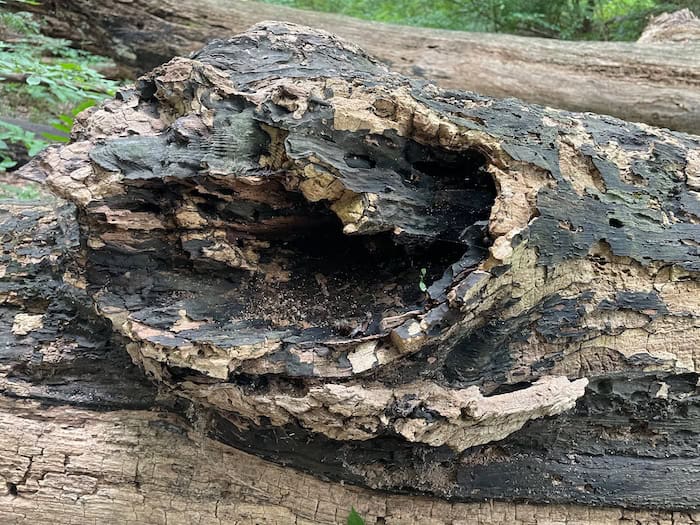
Image: engin akyurt

Share this:

  • Share
  • Email a link to a friend (Opens in new window) Email
  • Print (Opens in new window) Print
  • Share on Facebook (Opens in new window) Facebook
  • Share on X (Opens in new window) X
  • Share on LinkedIn (Opens in new window) LinkedIn

Filed Under: Body, Hearing, Mind, Sight Tagged With: body-mind balance, COVID-19, managing chronic disease, mindfulness, resilience

Tornado Warning

Evelyn Herwitz · September 9, 2025 · 2 Comments

On Saturday afternoon around 4:15, I was lying on our living room couch and reading (not light reading, literally and figuratively, an 850+ page history of the Thirty Years War, but that’s another story), when my cell phone alarm went off. Really loud: a National Weather Service warning of potential for a tornado in our vicinity for the next half-hour. TAKE SHELTER! it advised, with more details in all caps.

Now, it was already dark and pouring outside, and we’d experienced a bright flash and loud crack of thunder a few minutes earlier. A severe storms was definitely passing through. But tornado watches are rare in New England, let alone a tornado warning. (Years ago when I lived in Illinois, I never got used to all the watches and warnings, and tornadoes were my dream metaphors for anxiety, but all that ended when I moved back east.) Being the more cautious of the two of us, I checked with Al, who was immersed in another activity, to be sure he’d heard the alert. He shrugged and went back to what he was doing.

I went downstairs with my heavy book to read. Since our daughters moved away, our basement family room is really now a junk room for storage, but there’s still a couch and decent lighting. It’s musty and needs a good clean-up, one of my perpetual to-do’s that I mean to get to this winter (there, I’ve put it in writing). Part of Al’s old vibraphone was lying on the couch, so I rolled up the wooden tone bars, moved them to the side, then picked up the strip of metal resonator tubes, to do the same, lost my balance and fell. Fortunately, I fell on a rug (mostly), but I banged my knee on part of the vibraphone. Which was not fun.

There’s a small, high window in the room, and it was quite dark outside. I could hear the rain, but no thunder or lightening cracks. So I read and checked the time and read and finally went upstairs at 4:45. Al was still immersed. I got an ice pack out of the freezer for my knee and went back to my history book on the couch. I felt kind of silly, but so be it.

Until I learned, not long after, that a tornado had actually briefly touched down in a suburb not far from us at exactly 4:15. Known as a “spin-up” or “land spout” by meteorologists, it was relatively small and lasted only a few minutes. But the damage was significant. In that brief visit, it uprooted and destroyed numerous large trees, including some oaks, which are among the sturdiest trees in this part of the country.

Which just goes to show that you never know what’s just around the corner, and that it’s worth being cautious when the NWS sends you an all caps warning about approaching storms. Especially in this time of severe weather, I’d rather sit in our musty family room for a half-hour than risk a tree falling on our house. If I get my act together, the next time this happens, our old family room will be a much more pleasant space to wait it out.

Evelyn Herwitz blogs weekly about living fully with chronic disease, the inside of baseballs, turtles and frogs, J.S. Bach, the meaning of life and whatever else she happens to be thinking about at livingwithscleroderma.com. Please view Privacy Policy here.
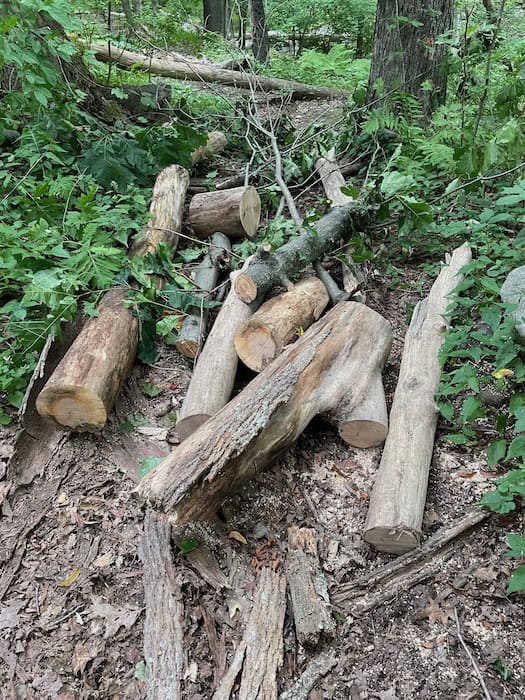
Image: Greg Johnson

Share this:

  • Share
  • Email a link to a friend (Opens in new window) Email
  • Print (Opens in new window) Print
  • Share on Facebook (Opens in new window) Facebook
  • Share on X (Opens in new window) X
  • Share on LinkedIn (Opens in new window) LinkedIn

Filed Under: Body, Hearing, Mind, Sight, Touch Tagged With: body-mind balance, mindfulness, resilience

Making Waves

Evelyn Herwitz · August 26, 2025 · 4 Comments

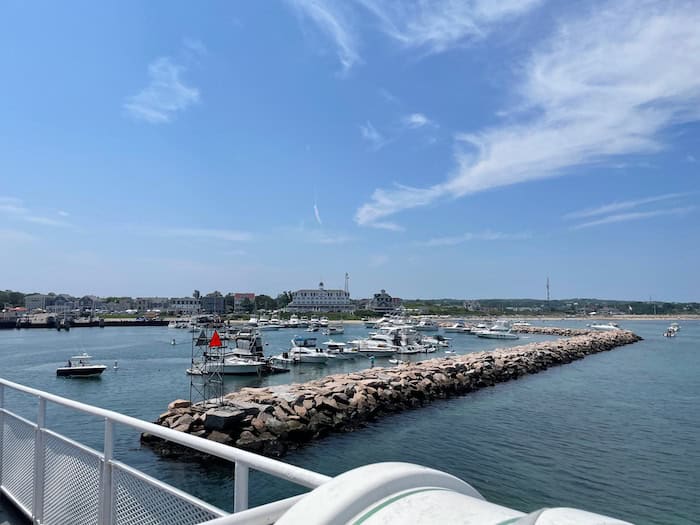
On Sunday, Al and I went to one of our favorite places, Block Island, an hour’s ferry ride off the Rhode Island coast. We used to vacation there when our daughters were young. Unlike just about anywhere else I can think of, the island remains a time capsule. Many of the same weathered buildings line the harbor that were there on our first visit 34 years ago. Dunes shift, as they are wont to do, but nearly half the island is protected open space, which has significantly preserved its unique charm. It is a comfort, a respite, a little slice of peace.

At our favorite beach, the sand bore traces of Hurricane Erin, which passed by the island late last week. It was packed down much farther from the shoreline, evidence of a very high tide. We had seen videos of the large traditional ferry (as opposed to high speed) arriving last Wednesday evening, rocking side to side at 45 degree angles as it neared the harbor. By Sunday, there was a bit more chop for our ferry ride than usual, but nothing truly remarkable.

Surf pounded. Little kids ran up to the wash of waves, screamed, and ran back, then raced toward it again. Swimmers flung their arms in the air as they jumped over breakers. Young and old dug moats and built sand castles. Farther up the beach, dogs romped. Paddle balls pocked back and forth. We didn’t find any sea glass, a favorite quest, but I collected a handful of smooth oval rocks of various hues to bring home.

It felt like a normal, relaxing, sunny day at New England’s Atlantic coast, at the end of vacation season. Some public schools have already started, so the crowds were thinner. At colleges and universities across the country, freshman have already arrived for orientation.

Which was the case this past Thursday at Villanova University near Philadelphia, where our younger daughter works. But that first day of freshman orientation was anything but normal.

Toward the end of Thursday afternoon, Al and I were at a celebratory event at our public library, marking the success of the first anniversary of a pilot project to plant a Miyawaki Forest in what was once a section of parking lot, a project I have been very involved in. I was chatting with a student from Rutgers University who had driven up from New Jersey to learn what we had accomplished, when I received a text from our daughter at 4:41:

Mom, I’m currently okay, but I need to let you know there’s an active shooter on campus.

I handed my phone to Al. We left immediately. As soon as we got home, I searched on my computer to see if I could find out any more details. Our daughter, who was barricaded with her boss and another co-worker in the boss’s office, relayed what little information she had—that the shooter may have been at a Mass for new students, that he was now inside the law school at the other side of campus, which was surrounded by law enforcement. That no one knew if anyone had been shot.

I didn’t know what to do. It didn’t feel real. But it was. What do you do when your cherished daughter is hiding with her coworkers from a maniac with an assault rifle, and there is no way you can protect her? I stared at my computer screen. I did some mindless work, just to do something. I texted some friends. I waited for the next text from our daughter.

Then I fell back on my journalism skills and began scouring the internet for whatever I could find that might help her and her coworkers. I checked CNN. No useful information. I found a few more details at the Associated Press, a little at The New York Times. The Philadelphia Inquirer reported that paramedics had arrived, along with police from the Tri-state area. There were video clips of students fleeing, of cop cars with flashing dome lights, of armed police approaching the law school, of snipers on rooftops. There were photos of the university green where freshmen and their parents had gathered in rows of white chairs, now empty, with white programs littered about. It was surreal, and all too numbingly familiar at the same time. Then I found a live news feed from the local ABC affiliate and passed that along. And kept finding reasons to check in. She, too, kept me posted, though news was sparse. We both knew this could go on for hours. We both hoped that the gunman would be caught soon.

About an hour-and-a-half into the crisis, she sent me another text, this time an official notice from Father Peter Donohue, Villanova’s president: There was no shooter. There were no injuries. The whole episode had been a cruel hoax.

Immense relief, all around. We were all so grateful no one was hurt, at least physically. The emotional trauma, though, is real. These are students who have spent all their years in school with active shooter drills and threats. And now, this, on what should have been a triumphant day of beginnings. And to top it off, a similar hoax took place earlier that day at the University of Tennessee in Chattanooga, a second hoax was called into Villanova on Sunday (this one affected a single dorm and was debunked in 40 minutes), and also on Sunday there was a similar incident at the University of South Carolina in Columbia. What kind of person concocts such evil schemes?

Of course, in this day and age in the U.S. of A., none of it topped the headlines. No one killed. Nothing to report. We have become so inured to this insanity and so inundated with political madness that a series of active shooter hoaxes at three universities at the beginning of the academic year merits only stories buried on websites.

Our daughter finally made it home two hours later, after waiting for security to sweep their building to be sure nothing had been missed, after Father Peter gathered the community twice, first to reassure everyone there was no danger, and again to finish the final prayer of the Mass that got interrupted by the crisis. We’ve talked numerous times, since. She is doing as well as anyone could, back to work the next day. Thank God.

Which is one of the main reasons why I really needed a trip to Block Island on Sunday, with its weathered buildings, its familiar beaches, its fresh fish dinners and sweet ice cream cones. I was able to relax for the afternoon, though I found my mind sifting through what had happened. I began to formulate this blog post. I studied myriad footprints, big and little, pressed into the hard-packed sand from hurricane-driven tides, and wondered about those children, screaming in mock fear of the waves. What would become of them in their journeys through school?

I wish we really could step back into the more innocent time the island conjures. But we can’t. We are here. We live in a dangerous, violent world, at a crossroads in the history of our nation’s democracy. It feels overwhelming to me. Then I draw on my experience these past few years, helping to create a dense, small forest next to our public library that promises to be an innovate way to ease summer’s intensifying heat in congested neighborhoods with no trees.

Our community came together to plant that forest. We had no idea when we embarked on this project that it would draw so much interest and inspire students and other communities to learn more and plant more, too. It’s essential to remember—I keep reminding myself—that most people in this world are good, honest, peace-loving people who want to nurture their corner of this planet. Even the smallest act of joining together to solve one problem for the betterment of others can create ripples that grow into waves of possibilities for the greater good. Doing my best to maintain that focus, imagine what could be, and work toward it one small step at a time, rather than get mired in all the darkness, is my only way forward.

Evelyn Herwitz blogs weekly about living fully with chronic disease, the inside of baseballs, turtles and frogs, J.S. Bach, the meaning of life and whatever else she happens to be thinking about at livingwithscleroderma.com. Please view Privacy Policy here.
 

Share this:

  • Share
  • Email a link to a friend (Opens in new window) Email
  • Print (Opens in new window) Print
  • Share on Facebook (Opens in new window) Facebook
  • Share on X (Opens in new window) X
  • Share on LinkedIn (Opens in new window) LinkedIn

Filed Under: Body, Hearing, Mind, Sight, Smell, Taste, Touch Tagged With: anxiety, resilience, stress, vacation

  • Page 1
  • Page 2
  • Page 3
  • Interim pages omitted …
  • Page 57
  • Go to Next Page »

Primary Sidebar

Subscribe via Email

Enter your email address to subscribe to Living With Scleroderma and receive new posts by email. Subscriptions are free and I never share your address.

About the Writer

When not writing about living fully with chronic health challenges, Evelyn Herwitz helps her marketing clients tell great stories about their good works. She would love to win a MacArthur grant and write fiction all day. Read More…

Blog Archive

Recent Posts

  • Here We Go Again
  • Until Next Year
  • And Now for Something Completely Different
  • 700-plus
  • It’s Never Simple

I am not a doctor . . .

. . . and don’t play one on TV. While I strive for accuracy based on my 40-plus years of living with scleroderma, none of what I write should be taken as medical advice for your specific condition.

Scleroderma manifests uniquely in each individual. Please seek expert medical care. You’ll find websites with links to medical professionals in Resources.

Copyright © 2026 · Daily Dish Pro on Genesis Framework · WordPress · Log in