• Mind
  • Body
  • Sight
  • Hearing
  • Smell
  • Taste
  • Touch
  • Skip to primary navigation
  • Skip to main content
  • Skip to primary sidebar

Living with Scleroderma

Reflections on the Messy Complexity of Chronicity

  • Home
  • About
    • Privacy Policy
  • What Is Scleroderma?
  • Resources
  • Show Search
Hide Search

Fall Back

Evelyn Herwitz · November 7, 2023 · Leave a Comment

For the first time since I can remember, setting back the clocks this weekend didn’t bother me. Usually, the shift to earlier sunrise and the quickening of darkness at day’s end leave me feeling a bit claustrophobic until my circadian cycle readjusts. But not this fall. Oddly, the changeover feels like it fits.

There’s been a lot of debate about whether we should change the clocks at all. The U.S. Senate unanimously passed the so-called Sunshine Protection Act last year, but then the bill stalled in the House of Representatives. Given the current chaos in Congress, I doubt if it will go anywhere soon, but the goal is to make Daylight Savings Time permanent, nationwide. Why? The main arguments involve, in part, the notion that more daylight hours for evening activities will provide an economic boost for restaurants and entertainment venues.

Compare that to a push by the American Association of Sleep Medicine (AASM), which advocates for sticking with standard time year-round. Here the rationale is that standard time better aligns with our bodies’ natural rhythms. More sunlight earlier in the day helps our brains to shut down production of the sleep hormone melatonin and switch over to wakefulness.

I had read about this debate last year, and when we switched to DST last March, I felt very off-kilter. Now I feel back in synch. Coincidence, or the power of suggestion? I have no clue.

In any case, everyone seems to agree that switching back and forth twice a year is not good for anyone. According to the AASM, this time toggling actually increases risk of heart attack and strokes, mood disturbances and even suicides.

I’m curious to see how I feel as darkness settles sooner over the next few weeks. Not having to drive back from a doctor’s appointment in Boston in late afternoon or run errands at the end of the day definitely helps me to adjust. So does focusing on the stark light of November, when trees are bare and the shadows sharp, a time of transition that I find particularly striking.

And so does the knowledge that in just over six weeks, our days here in the Northern Hemisphere will gradually lengthen, once again. For all the turmoil in our troubled world, Nature’s rhythms soothe.

Evelyn Herwitz blogs weekly about living fully with chronic disease, the inside of baseballs, turtles and frogs, J.S. Bach, the meaning of life and whatever else she happens to be thinking about at livingwithscleroderma.com. Please view Privacy Policy here.

Image: Jack Hunter

Share this:

  • Share
  • Click to email a link to a friend (Opens in new window) Email
  • Click to print (Opens in new window) Print
  • Click to share on Facebook (Opens in new window) Facebook
  • Click to share on X (Opens in new window) X
  • Click to share on LinkedIn (Opens in new window) LinkedIn

Filed Under: Body, Mind Tagged With: body-mind balance, managing chronic disease, mindfulness, resilience

Small Miracles

Evelyn Herwitz · October 31, 2023 · Leave a Comment

For months, at least since March and maybe longer, I’ve had a charcoal-gray pit of calcium sticking in my left thumb. I have not been able to budge it or tease it out with tweezers. It has been lodged there, staring at me as I change my bandages morning and night. Sometimes it hurts, other times not. Sometimes it gets infected. Mostly it just serves as a reminder to handle things with care so I don’t bang it.

That is, until this weekend. I was doing my evening routine of cleaning my ulcers and re-bandaging them when I suddenly realized that the calcium pit was gone. No bigger than a poppy seed, it lay there on a piece of tissue. Really? I wondered, rolling it between thumb and forefinger, you were that small all this time?

More calcium hides beneath the surface in both of my thumbs. In x-rays, they look like long white chains from thumb tip to below the joint connecting thumb to palm. Slowly but inevitably, the pits work their way out of the skin. There’s nothing I can do to get rid of them but wait until they are ready to emerge, then wait until each one dislodges.

There is an obvious lesson about patience, here. I’ve learned to play along, not to aggravate the skin and nerves by jiggling the pit in a vain attempt at extraction. As long as I’m careful with how I cushion it with dressings and use Aquafor ointment to keep it moist (but not too moist) eventually, the calcium will exit on its own.

But there’s something else that fascinates. And that is how my body continually surprises me with its ability to heal, scleroderma or no scleroderma. It doesn’t always happen the way I want it to, or on a convenient timeline, but it does happen. That a calcium pit the size and color of a poppy seed can cause so much discomfort and then, one random evening, bid adieu, is one of the mysteries of this disease and the miracles of the healing process.

And so, until the next one appears, I will tend the hole in my thumb as it fills and be grateful for the reprieve.

Evelyn Herwitz blogs weekly about living fully with chronic disease, the inside of baseballs, turtles and frogs, J.S. Bach, the meaning of life and whatever else she happens to be thinking about at livingwithscleroderma.com. Please view Privacy Policy here.

Image: Victoria Tronina

Share this:

  • Share
  • Click to email a link to a friend (Opens in new window) Email
  • Click to print (Opens in new window) Print
  • Click to share on Facebook (Opens in new window) Facebook
  • Click to share on X (Opens in new window) X
  • Click to share on LinkedIn (Opens in new window) LinkedIn

Filed Under: Body, Mind, Sight, Touch Tagged With: calcinosis, finger ulcers, hands, managing chronic disease, resilience

Healing Stories

Evelyn Herwitz · October 24, 2023 · 2 Comments

One of the most complicated aspects of scleroderma is how it changes our relationship with our bodies. Hands that were once dexterous now are cramped, facial skin no longer flexes. It can become very hard to pick up objects, bend over, reach. In its most virulent form, this debilitating disease literally traps you in your own skin. It’s painful, exhausting, achey. Not to mention internal organ damage to heart, lungs, kidneys, gut.

As I’ve written before, I’ve been graced with a reversal of some of the worst aspects of scleroderma during my first decade of the four that I’ve been living with this chronic disease. I credit the use of d-penicillamine early on, a treatment that was never fully embraced by the medical profession due to inconclusive research. But it worked for me, loosening tight skin in my hands, forearms, and face. I still have abnormal skin that limits my dexterity and ability to open my mouth, but nothing like before, when it was becoming uncomfortable to blink.

Grateful as I am with that gift, I also still wrestle with how scleroderma has affected my face and damaged my hands. Scleroderma ages you prematurely. I’ve learned to make the best of what I have, but it can still be discouraging to look in the mirror.

So, I deeply appreciated an interview that I heard over the weekend with Krista Tipppet of the On Being Project, and Matthew Sanford, about “The Body’s Grace.” Sanford, now in his 40s, survived a car crash when he was 13 that took the lives of his father and sister, and left him paralyzed from the waist down. He speaks of a deepened relationship with his body, a knowing derived from inner silence, a reconnecting with those parts that no longer feel and work as they once did.

Sanford likens this awareness to “walking from a well-lighted room into a dark one. At first, you can’t see anything. But if you sit, and you pause, and you listen, usually there’s enough light to get across the room. It’s not going to be like turning the light back on, but in fact, the world gets this other kind of texture that makes it beautiful. It also makes it scary in the dark; it goes either way.”

Coming to terms with a life-altering accident or disease is a lifelong process that Sanford calls a “healing story.” And, as he and Tippett discuss, all too often, in our youth-obsessed culture, the healing stories we tell ourselves are ones of overcoming physical and emotional adversity. With enough willpower, we, too, can be the 80-year-old who runs a marathon or skydives; we, too, can “power through” anxiety or depression.

Though willpower is an important skill for confronting physical weakening or loss or just plain aging, Sanford suggest that it shouldn’t be the sole or primary skill. Finding your own, unique path of mind-body integration when the connections are weakened or severed is a journey toward a deeper relationship with your physicality and your body’s miraculous striving toward healing, even when damaged. It is also a journey toward deeper appreciation of your connections with others and the world.

We are always so much more than our medical diagnoses. We are so much more than our physical limitations. Each of us writes our own healing story as we learn how to see in the dark.

Here’s a link to the On Being podcast interview with Matthew Sanford as well as a transcript.

Evelyn Herwitz blogs weekly about living fully with chronic disease, the inside of baseballs, turtles and frogs, J.S. Bach, the meaning of life and whatever else she happens to be thinking about at livingwithscleroderma.com. Please view Privacy Policy here.

Image: Spenser Sembrat

Share this:

  • Share
  • Click to email a link to a friend (Opens in new window) Email
  • Click to print (Opens in new window) Print
  • Click to share on Facebook (Opens in new window) Facebook
  • Click to share on X (Opens in new window) X
  • Click to share on LinkedIn (Opens in new window) LinkedIn

Filed Under: Body, Mind, Touch Tagged With: body-mind balance, managing chronic disease, mindfulness

The View from Black Mountain

Evelyn Herwitz · October 17, 2023 · 4 Comments

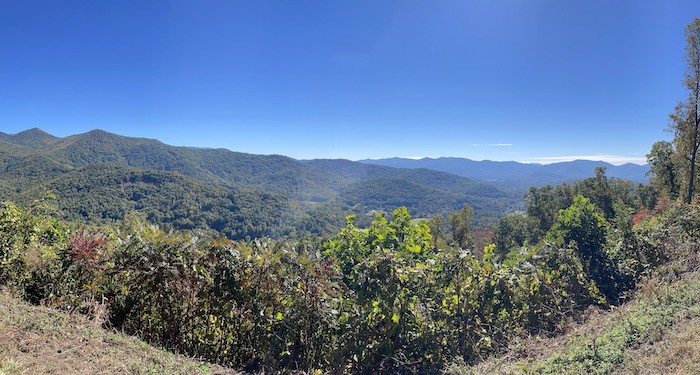
Eighty years ago, my mother graduated from Black Mountain College in North Carolina. She was one of the few students in this small, experimental college to actually graduate, though the fact that the institution was never accredited caused some issues when she began to apply for work beyond the home in the 1970s.

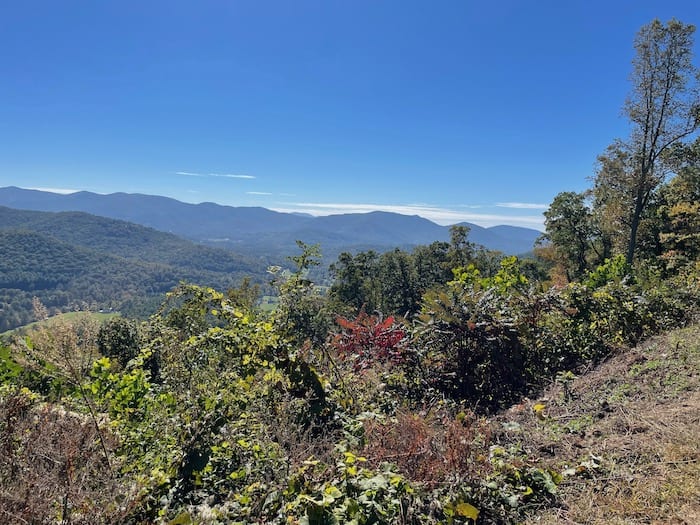
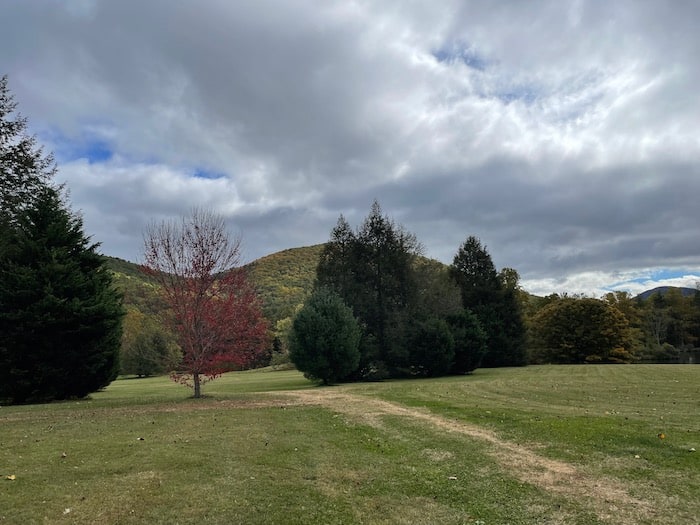
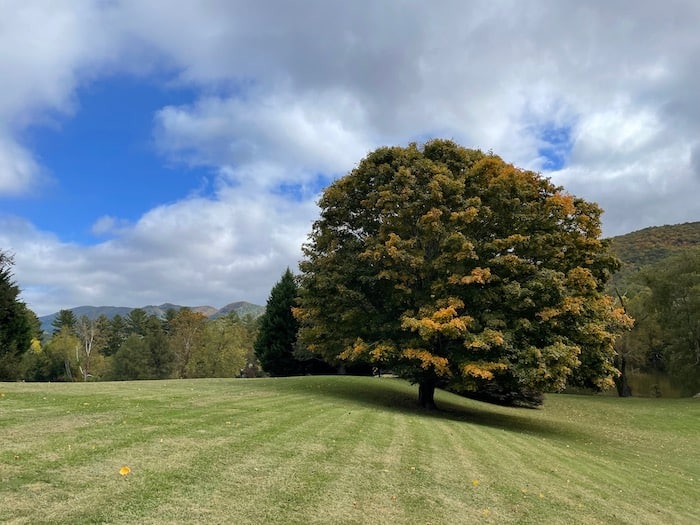
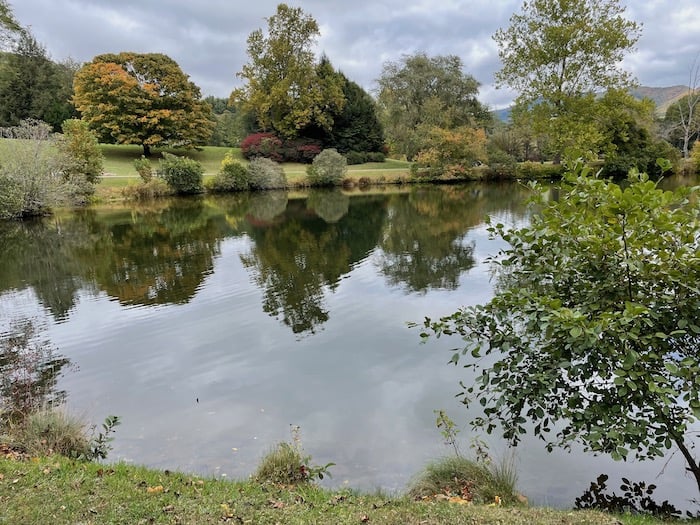
No matter. BMC was a unique, character-shaping environment that left a deep impression on all who studied and worked at its bucolic campus, beneath the beauty of the Blue Ridge Mountains, near Asheville. The college, which existed from 1933 to 1957, placed the arts at the core of its curriculum, with a particular focus on how a specific material or medium—paint, clay, fiber, paper, wood, concrete, photography, dance, music, poetry, and more—defines and informs the act of creating. The place was a hive of interdisciplinary cross-fertilization and produced a generation of extraordinary talents, taught by some of the most influential artists and thinkers of the 21st century.

My Mom, however, was not an artist. She was a psychology major. But she also helped to build BMC’s Lake Eden campus, its second home, as part of the school’s work collective. Collaboration was key to the BMC ethos, perfected in the work program. So was democratic governance by students and faculty. Among Mom’s fondest recollections of her three years at Black Mountain was learning carpentry, pipe-fitting, masonry, and electrical wiring to help build the Studies Building and the college’s farm buildings.

I was immersed in this inspring environment over the past weekend at a conference about Black Mountain, which I shared with our younger daughter. It was a fascinating deep dive into scholarship about BMC, its students and faculty and staff, its unique educational philosophy. We met some truly wonderful people who welcomed us into their circle with open arms. It was also a needed respite from the chaos gripping the world, even as grim headlines tap-tap-tapped on my mind throughout our stay.

Somehow, despite all its many financial struggles, BMC managed to flourish through the Great Depression and World War II as an avant-garde island in the Jim Crow South. The McCarthy era of Red-baiting, as well as changes in GI education funding, eventually spelled its demise. But the cultural and intellectual contributions, as well as the mythology of Black Mountain, live on. I will be processing what I’ve learned for a long time. Already, though, I feel the gravitational pull toward a BMC way of thinking and doing. All good.

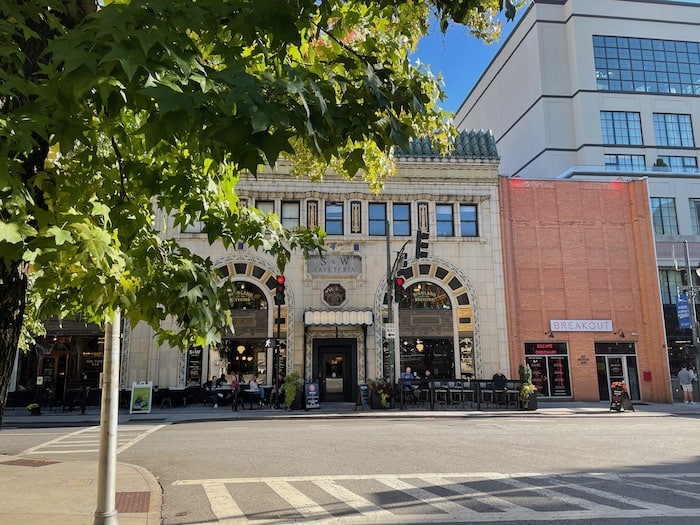
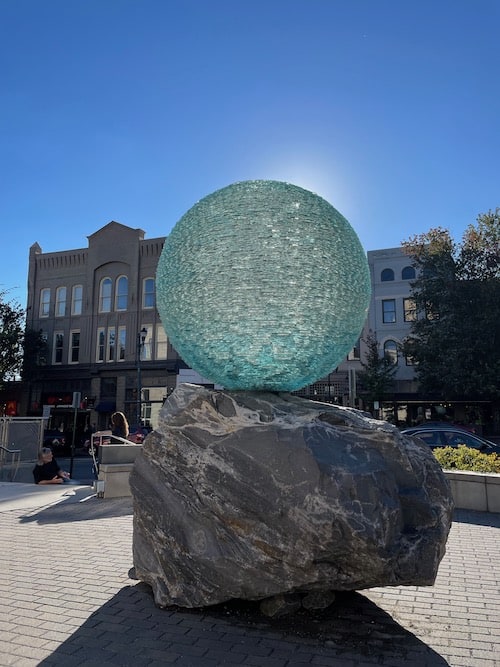
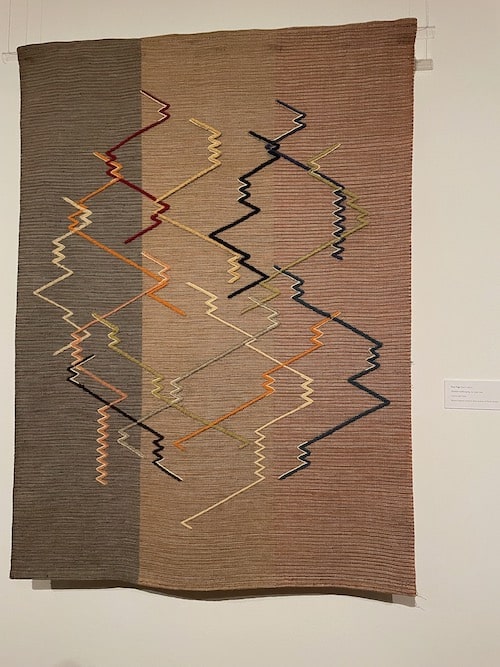
Here are some images of our visit to Asheville, the weaving exhibition at the heart of the conference, the former campus, and the stunning Blue Ridge Mountains. Enjoy, y’all.

Evelyn Herwitz blogs weekly about living fully with chronic disease, the inside of baseballs, turtles and frogs, J.S. Bach, the meaning of life and whatever else she happens to be thinking about at livingwithscleroderma.com. Please view Privacy Policy here.

Share this:

  • Share
  • Click to email a link to a friend (Opens in new window) Email
  • Click to print (Opens in new window) Print
  • Click to share on Facebook (Opens in new window) Facebook
  • Click to share on X (Opens in new window) X
  • Click to share on LinkedIn (Opens in new window) LinkedIn

Filed Under: Body, Hearing, Mind, Sight, Touch Tagged With: mindfulness, resilience, travel

What My Mother Wrote

Evelyn Herwitz · October 10, 2023 · 5 Comments

My mother would have been 101 this Thursday. She died 24 years ago of a rare and virulent form of thyroid cancer that took her life in four months. I have often thought, in recent years, that I’m grateful she was spared our current domestic and global turmoil. She and her parents escaped Nazi Germany in 1936 and made a good life here in the U.S., and she died, albeit too soon, in peace.

I’ve been thinking of her as I prepare to meet our younger daughter in Asheville, N.C., on my mother’s birthday. We’re getting together for a weekend conference about Black Mountain College, which was a small, experimental college centered on the study and practice of the arts, run as an earnest democracy by students and faculty. Mom loved her years there, a place of deep self-discovery. She focused on psychology rather than the arts, though she was a dedicated member of the theater stage crew, and she also helped to build part of the campus. I know this, because I have all of her correspondence with my grandparents from her college years.

Rereading this huge treasure trove, I came across her letter from December 7, 1941, the day that Japan attacked Pearl Harbor. I share part of this with you because it resonated for me so deeply after the horrific events in Israel this past weekend. For some context, in the months leading up to Pearl Harbor, she had been commenting on everyone’s concerns that war was inevitable, as her male classmates, one by one, were already enlisting.

Here is what my mother wrote. She was 19 years old:

Dearest folks,

It seems so funny to be writing a letter today, after all that has happened. The day started out like any other Sunday around here. I had most of my studying done, and was feeling very good. Around 10:30 I went up to Paul’s to give back a book I had borrowed. Roman came up later on, and the three of us had a swell time just talking about Paul’s work. The manuscript of his new book had just come from the publisher’s for correction, and we helped him with that. By 3:00 o’clock Roman and I went to the study building, because he wanted to work on his new room. As we were going through the hall Bob B came up to us and asked us whether we had heard any news. Upon our question as to what kind of news, he told us that Japan had declared war on the U.S. Both of us felt at once relieve that it finally had happened, and yet puzzled that it was Japan who did the attacking. Paul, to whom we brought the news, said it was the beginning of the end of Hitler, when the latter had to resort to Japan’s attacking the U.S. in order to stop whatever little help we have been able to give Russia.

We went back to the lodge after that little illumination, feeling very depressed and gloomy about the whole affair. Everybody was in that depressed mood, because we realized that this war was finally destroying whatever there was left of the world as we knew it, and the effect it would have on the future of the college and ourselves. It was after dinner that Lies K. and I got together in the lobby to discuss what was really happening to us, and most of all what the positive values were that might still be in the world. After a rather lengthy searching we came to the following conclusions: After all it does do us not much good to ask why we exist or what we live for, or what the purpose of life may be. We realize that there is no God, but that there is a lot of beauty in the world. We do not believe in the nobility of man, but we do know that men have written great literature, thought many thoughts, thoughts about the question of life and death, that they have composed great and beautiful music and art. We do not believe in any utopia which will make everybody happy because of some political system, but we do realize that all people are in the long run depended upon one another for the bare fact of living. What then are the values that remain for us to hand on to our children, values that will be true even in the changed world after the war and the struggle that is still coming to us and to them? Every human being has a right to food, shelter and clothing. Every human being has a right to affection and happiness (even though that is relative), and to the security arising from self-confidence and the relations with other people. The right to breathe fresh air, to enjoy a sunrise or a sunset, or a moonlight night, the self-realization that comes out of a love relation between two people; the right to enjoy music, literature, and art; the right to think and worship, the right to learn—all are the birthright of every human being. Those are the positive items which we are going to teach our children, and those are the things to see ourselves through the struggle ahead of us.

I am not sure whether we or the next or even the immediately following generations will achieve a state of existence in which those rights will be put into practice, as a matter of fact I seriously doubt it. However, as long as they remain present in the minds of people there is a hope left for their eventual realization.

With those ideals in mind we are willing to make the sacrifice of our life, of fighting a war, of eventually marrying and having children, if we are not killed in the process of the war. I think that I am able to face whatever is coming now with a comparative peace of mind, even though I am aware that my friends may be killed, that I may be killed, and that it will be “tough going” for the rest of my life. Another thing, no matter how hard the going may be, I shall always try to see the brighter side of happenings and get all the genuine happiness out of life that there is to gather. . . .

While Mom’s worldview evolved from that grim manifesto, rejecting atheism for an agnostic spirituality, she remained an optimist, despite all the disruptions that she endured. Even in her last days, she confronted death with great calm and courage. May her memory be for a blessing—and for an inspiration in these dark days.

Evelyn Herwitz blogs weekly about living fully with chronic disease, the inside of baseballs, turtles and frogs, J.S. Bach, the meaning of life and whatever else she happens to be thinking about at livingwithscleroderma.com. Please view Privacy Policy here.

Share this:

  • Share
  • Click to email a link to a friend (Opens in new window) Email
  • Click to print (Opens in new window) Print
  • Click to share on Facebook (Opens in new window) Facebook
  • Click to share on X (Opens in new window) X
  • Click to share on LinkedIn (Opens in new window) LinkedIn

Filed Under: Body, Mind Tagged With: resilience

  • « Go to Previous Page
  • Page 1
  • Interim pages omitted …
  • Page 21
  • Page 22
  • Page 23
  • Page 24
  • Page 25
  • Interim pages omitted …
  • Page 141
  • Go to Next Page »

Primary Sidebar

Subscribe via Email

Enter your email address to subscribe to Living With Scleroderma and receive new posts by email. Subscriptions are free and I never share your address.

About the Writer

When not writing about living fully with chronic health challenges, Evelyn Herwitz helps her marketing clients tell great stories about their good works. She would love to win a MacArthur grant and write fiction all day. Read More…

Blog Archive

Recent Posts

  • Storm Watch
  • A-Peeling
  • Second Skin
  • Try, Try Again
  • What If?

I am not a doctor . . .

. . . and don’t play one on TV. While I strive for accuracy based on my 40-plus years of living with scleroderma, none of what I write should be taken as medical advice for your specific condition.

Scleroderma manifests uniquely in each individual. Please seek expert medical care. You’ll find websites with links to medical professionals in Resources.

Copyright © 2026 · Daily Dish Pro on Genesis Framework · WordPress · Log in