• Mind
  • Body
  • Sight
  • Hearing
  • Smell
  • Taste
  • Touch
  • Skip to primary navigation
  • Skip to main content
  • Skip to primary sidebar

Living with Scleroderma

Reflections on the Messy Complexity of Chronicity

  • Home
  • About
    • Privacy Policy
  • What Is Scleroderma?
  • Resources
  • Show Search
Hide Search

Touch

Rx for TP

Evelyn Herwitz · July 7, 2020 · 1 Comment

The Great Toilet Paper shortage may have eased for now, but in recent months, when little was to be found on grocery store shelves, I found myself confronted once again with challenges of personal hygiene. As I’ve written before, cleaning up after #2 is not easy when your hands don’t work well. This has been exacerbated for me recently with painful calcium deposits in the pads of both thumbs. But with toilet paper a scarce commodity, I’ve had to be conscious of conserving paper—as any of you with scleroderma well know, that makes it extra hard to really do the job.

For several years I relied on “flushable” wipes, which are a very efficient solution. But I had to give up after the second of two disastrous lessons in the physics of sewer line back-ups into our basement. As our plumber said, there’s no such thing as a flushable wipe. Indeed, not only do they clog plumbing, but also those wet wipes that make it into the sewer system cause major problems in public waste sanitation systems, creating what the industry terms “fatbergs” that destroy expensive pumps.

After our trip to Greece last summer, where you quickly learn to toss all toilet paper in the handy waste basket next to the toilet, because the plumbing and sewers can’t handle even regular toilet paper, I tried a modified approach of disposing my wipes, wrapped in more toilet paper, into the bathroom waste can. But this uses a lot of paper, once again, and the wipes are also still not biodegradable. Moistening toilet paper with water doesn’t work well, either, if (a) you have bandages that you don’t want to get wet, and (b) the toilet paper often disintegrates.

So, this brings me to my latest solution, which I found thanks to all the articles and blogs being written about toilet paper alternatives when none could be found due to the pandemic: a postpartum peribottle. Designed for women to ease soreness after childbirth, this is a soft rubber bottle with a spout with a hooked end, so you can hold it upside down, aim and squirt. It does not eliminate the need for toilet paper, but it certainly cuts down on how much.

I found one for $15 online, and it has a collapsible spout and even a little bag for travel. It takes a little practice, but it is definitely the easiest and cleanest solution I’ve come across so far. And it’s far cheaper than installing a bidet.

Even if you don’t have hand problems, using a peribottle is a mighty convenient way to conserve toilet paper—which, in turn, saves the trees that toilet paper is made from. And saving trees helps to moderate climate change and maintain animal habitats—which matters for a host of reasons, including the mounting evidence that human encroachment on natural habitats contributed to the way that a bat-borne virus morphed into the COVID-19 pandemic. It’s all interconnected, folks.

Evelyn Herwitz blogs weekly about living fully with chronic disease, the inside of baseballs, turtles and frogs, J.S. Bach, the meaning of life and whatever else she happens to be thinking about at livingwithscleroderma.com. Please view Privacy Policy here.

Image: Jasmin Sessler

Share this:

  • Share
  • Email a link to a friend (Opens in new window) Email
  • Print (Opens in new window) Print
  • Share on Facebook (Opens in new window) Facebook
  • Share on X (Opens in new window) X
  • Share on LinkedIn (Opens in new window) LinkedIn

Filed Under: Body, Mind, Sight, Smell, Touch Tagged With: finger ulcers, hands, hygiene, managing chronic disease, Raynaud's, resilience

Unnecessary Procedures

Evelyn Herwitz · June 23, 2020 · 4 Comments

For well over a year, I’ve had a piece of grey calcium protruding from the pad of my right thumb. As I wrote back in February, I finally saw my hand surgeon and worked out a plan for him to remove it—the challenge being that it’s only the tip of a long chain of calcium that runs down the entire thumb. It gets in the way, hurts when I bump it, and generally makes me drop things.

Surgery was originally scheduled for this spring, but, of course, the pandemic put that plan on hold. I got a call at the end of May, as the hand surgeon’s office began to reopen, to see if I wanted to reschedule for June, but I declined. It just felt too soon—a good thing, as it turned out, because I got an infection in the left thumb that has taken weeks to clear, and I know he wouldn’t have operated under that circumstance, even if the opposite thumb was the problem.

The situation in the past few weeks has gotten really uncomfortable. With the clearing infection on the left and protruding calcium on the right, I was having greater and greater difficulty doing basic tasks. I had a note in my calendar to call the hand surgeon’s office this week and was now ready to get on his schedule as soon as possible.

Then, Sunday night, as I was changing clothes to get ready for bed, I felt a sharp twinge in my right thumb. Then I noticed some blood on my nightclothes. Sure enough, that nasty chunk of calcium had finally, finally, broken off of its own accord. It left a hole in my thumb, about an eighth of an inch deep. The tip of the rest of the calcium chain was barely visible and far enough beneath the surface to remain inoffensive, for now.

I was thrilled. No more need for surgery, no more risk of exposure in a medical setting to infections or Corona, regardless of precautions. From long experience, I knew the hole would quickly close up on its own. So I rinsed it with peroxide, bandaged it with antibacterial ointment, and went to bed.

By Monday morning, it was already half healed. Warm weather certainly helps. Best of all, I can finally use my right thumb again.

This is not to say that, if I’d had no relief, I wouldn’t have gone ahead with the procedure. But our bodies do have a way of healing themselves. I kept hoping this would happen on its own, which is why I took so long to see my hand surgeon in the first place. As if to drive the point home, in Monday morning’s New York Times was this article about how people who have had elective procedures postponed during the pandemic are actually staying healthier than expected.

Complex trade-offs. Grateful that the scale of options swung in favor of non-invasive, this time.

Evelyn Herwitz blogs weekly about living fully with chronic disease, the inside of baseballs, turtles and frogs, J.S. Bach, the meaning of life and whatever else she happens to be thinking about at livingwithscleroderma.com. Please view Privacy Policy here.

Image: Roman Kraft

Share this:

  • Share
  • Email a link to a friend (Opens in new window) Email
  • Print (Opens in new window) Print
  • Share on Facebook (Opens in new window) Facebook
  • Share on X (Opens in new window) X
  • Share on LinkedIn (Opens in new window) LinkedIn

Filed Under: Body, Mind, Sight, Touch Tagged With: calcinosis, finger ulcers, hand surgery, hands, managing chronic disease, resilience

To Stay or Go

Evelyn Herwitz · June 9, 2020 · Leave a Comment

It’s been hard to concentrate. Peaceful protests across the country and around the world that began with the murder of George Floyd and have swelled to encompass deeper and broader issues of racial injustice throughout our society demand attention and engagement. And here I sit, because of Covid, wanting to join in but knowing I can’t afford the risks.

I’ve joined several public protests in the past three-and-a-half years—the first Women’s March; several demonstrations protesting treatment of immigrants, including one in Washington, D.C., in Lafayette Park across from the White House; a local march for gun safety. That’s more protests than I ever did when I was growing up in the sixties, because our parents wouldn’t let me and my sister attend anti-Vietnam War and civil rights demonstrations out of fear for our safety. Now I’m 66 years old, older than they were then, during one of the seminal moments in our nation’s history, and I’m stuck at home.

I talked this over with my cardiologist Monday morning, on a previously scheduled phone appointment. He was quite clear that I need to avoid crowds due to my pulmonary risks with scleroderma and the nature of COVID-19. This advice reinforced my earlier conclusions. So I will stay put.

But my heart is with the peaceful demonstrators. And so I have written to our congresspeople, made donations, talked with family and friends across the political spectrum. I read and follow many news sources to stay informed and aware of a range of views. I listen to various podcasts to gain deeper insights and understanding of the profound injustices at stake. Most of all, I hope to find a way to help from home to support free and fair elections—the essential issue this November.

Each of us has to determine how to respond to this moment. It is my prayer that we will find our way to greater empathy for all, a more compassionate and just society, true public safety, and a willingness to really listen to each other in order to get there.

Evelyn Herwitz blogs weekly about living fully with chronic disease, the inside of baseballs, turtles and frogs, J.S. Bach, the meaning of life and whatever else she happens to be thinking about at livingwithscleroderma.com. Please view Privacy Policy here.
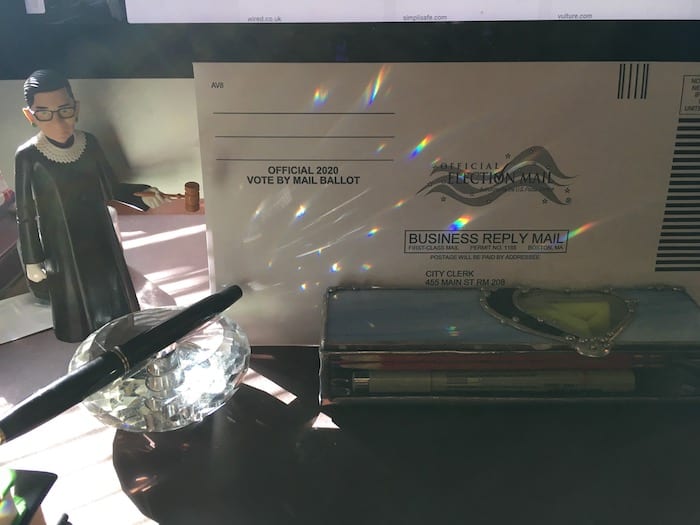
Image: Max Bender

Share this:

  • Share
  • Email a link to a friend (Opens in new window) Email
  • Print (Opens in new window) Print
  • Share on Facebook (Opens in new window) Facebook
  • Share on X (Opens in new window) X
  • Share on LinkedIn (Opens in new window) LinkedIn

Filed Under: Body, Hearing, Mind, Sight, Touch Tagged With: body-mind balance, COVID-19, managing chronic disease, resilience

The Long Road Ahead

Evelyn Herwitz · June 2, 2020 · 2 Comments

There is so much anguish across America. In my city, on Sunday, the protest about the death of George Floyd in Minneapolis at the hands of police was peaceful, righteous, and culminated in a handshake between the local leader of Black Lives Matter and the white police captain. Together, they led a march from downtown police headquarters back to City Hall, where the demonstration had started.

The hard work remains before us. Systemic racism in our country is on stark display. Even before the turmoil of this past week rivited the nation’s attention (once again) on racial injustice, the pandemic exposed mounting evidence that people of color in this country are at greater risk of life-threatening consequences of COVID-19 than whites. But those risks of poorer health outcomes are not limited to Corona. Our health care system must address racial disparities in access and treatment that tip the scales against people of color.

In a comprehensive 2018 report by Martha Hostetter and Sarah Klein of The Commonwealth Fund, “In Focus: Reducing Racial Disparities in Health Care by Confronting Racism,” the authors state, “A black woman is 22% more likely to die from heart disease than a white woman, 71% more likely to perish from cervical cancer, and 243% more likely to die from pregnancy- or childbirth-related causes.”

The reasons for these discrepancies go far beyond income disparities and associated risks. As the report explains, at the core of racial disparities in health are not only lack of access to quality health care but also lack of equitable treatment—and the long-term impact of stress.

Referring to the data cited above, the report states:

These findings have led some health care researchers to suggest that the experience of being a black woman in America is, itself, a risk factor—and that attention must be paid both to black women’s level of stress throughout their lives and how they are treated by health care professionals. ‘There’s often an assumption in the medical world that racial disparities are due to something genetic, when in fact it might be racism,’ says Neel Shah, M.D., assistant professor of obstetrics, gynecology, and reproductive biology at Harvard Medical School. ‘We’re taught that racism is evil so it’s hard to recognize that in ourselves. But the studies suggest, for example, that we believe black women less when they express symptoms, and we tend to undervalue their pain.’

Poorer health outcomes for people of color are not limited to women. According to the Centers for Disease Control, “African American men suffer disproportionately from high blood pressure, a known risk factor for heart disease and stroke.” I’m summarizing here for the sake of brevity, not to diminish the significance of these statements. This is but the tip of a massive iceberg of the chronic health impact of living in a society where skin color remains a major determinant of personal safety and well-being.

Anyone who lives with an autoimmune disease knows that stress triggers all sorts of unwanted health issues. Chronic stress leads to chronic disease. Our country has a long way to go to address the many racial injustices that are hard-wired into our society. Acknowledging and addressing the cost of racism in our health care system is an essential place to start.

Evelyn Herwitz blogs weekly about living fully with chronic disease, the inside of baseballs, turtles and frogs, J.S. Bach, the meaning of life and whatever else she happens to be thinking about at livingwithscleroderma.com. Please view Privacy Policy here.

Image: munshots

Share this:

  • Share
  • Email a link to a friend (Opens in new window) Email
  • Print (Opens in new window) Print
  • Share on Facebook (Opens in new window) Facebook
  • Share on X (Opens in new window) X
  • Share on LinkedIn (Opens in new window) LinkedIn

Filed Under: Body, Hearing, Mind, Sight, Touch Tagged With: COVID-19, managing chronic disease, resilience

Thumbkin

Evelyn Herwitz · May 26, 2020 · 2 Comments

Memorial Day Weekend was low key for me this year. Not only because of the pandemic, although that certainly set the tone. The weather wasn’t the culprit; it was quite beautiful here for most of the weekend. There was simply nowhere that I felt like going to mark the beginning of what will be a most unusual summer season.

Some of my mood involved wanting to avoid crowds. I understand everyone’s restlessness and desire to get out and away, but I really don’t get all the celebrating without social distancing and masks. Pretending it’s over or choosing to ignore the risks to others from your own actions is to be willfully irresponsible. The virus doesn’t care how impatient we are. It will always have the last say. Tragically, the consequences of crowding over this weekend will be all too clear in a few weeks as the infection rates climb again.

The rest of my mood was due to spending the better part of the past few days recovering from a sudden and severe infection to my left thumb. I don’t know how I picked it up, though I suspect a visit to one of my providers in a hospital office a couple of weeks ago, when I was not allowed to wear protective gloves (hospital policy). In any case, several days after that appointment, my thumb started acting up, and by Monday, a course of topical antibiotics didn’t help, so on Tuesday I started my standby antibiotic to stem the tide.

It seemed as if this was calming down the discomfort for a couple of days, but by Thursday, I was experiencing more pain, and by Friday, I had spent a restless night trying to deal with what was becoming one of the worst bouts I’ve had with pain management in about three years. On a scale of 0 to 10, I was hovering around 8 or 9. The sensation was akin to the literal purpose of a ‘thumbkin’— thumbscrew torture—that, and unpredictable electric shocks from inflamed nerve endings. Not fun.

Fortunately, my infectious disease specialist prescribed a stronger antibiotic on Friday, and after the third dose on Saturday, the swelling began to recede and the pain was significantly less intense. I am exceptionally grateful to him, given that he’s the head of infectious diseases for one of our local hospitals and quite busy with COVID-19 cases. I’ve known him for at least 20 years, he trusts my account of symptoms, knows all the antibiotics I’m allergic to, and took an educated guess about this one, which seems to have done the trick without setting off a reaction (so far). We speak by a telehealth appointment this afternoon to review status.

The swelling and aftermath at the tip of my thumb caused the skin to rupture and allow pits of calcium and liquified calcium to escape, which also helped to relieve pressure and pain. I’ve known for decades that there’s a Milky Way of these pits in both thumbs due to calcinosis, and any inflammation or swelling stirs them up. I’ve been carefully debriding the wound, another skill I’ve developed over years of dealing with digital ulcers, and will be babying this thumb for weeks to come as it heals.

But here’s where the beginning of the summer season really is something to celebrate. It’s getting warmer, always good for healing. My energy bounced back pretty quickly after catching up on sleep over the long weekend. I’m feeling much more like myself again, and I’m grateful for the extra time to rest.

This infection is also a strong reminder that microscopic bacteria and viruses are ever present. Just because we can’t see them with the naked eye doesn’t mean they aren’t there. Skin is our first line of defense against disease. For those of us with scleroderma, caring for our skin and overall health is just a whole lot more complicated than hand washing. To get through this pandemic, however long it lasts, however inconvenient the restrictions may seem, there is nothing more important right now than taking the needed precautions that will protect ourselves and others, whether known or not.

End of rant. Be well.

Evelyn Herwitz blogs weekly about living fully with chronic disease, the inside of baseballs, turtles and frogs, J.S. Bach, the meaning of life and whatever else she happens to be thinking about at livingwithscleroderma.com. Please view Privacy Policy here.

Image: Kon Karampelas

Share this:

  • Share
  • Email a link to a friend (Opens in new window) Email
  • Print (Opens in new window) Print
  • Share on Facebook (Opens in new window) Facebook
  • Share on X (Opens in new window) X
  • Share on LinkedIn (Opens in new window) LinkedIn

Filed Under: Body, Mind, Touch Tagged With: body-mind balance, calcinosis, finger ulcers, managing chronic disease, resilience

  • « Go to Previous Page
  • Page 1
  • Interim pages omitted …
  • Page 34
  • Page 35
  • Page 36
  • Page 37
  • Page 38
  • Interim pages omitted …
  • Page 89
  • Go to Next Page »

Primary Sidebar

Subscribe via Email

Enter your email address to subscribe to Living With Scleroderma and receive new posts by email. Subscriptions are free and I never share your address.

About the Writer

When not writing about living fully with chronic health challenges, Evelyn Herwitz helps her marketing clients tell great stories about their good works. She would love to win a MacArthur grant and write fiction all day. Read More…

Blog Archive

Recent Posts

  • Here We Go Again
  • Until Next Year
  • And Now for Something Completely Different
  • 700-plus
  • It’s Never Simple

I am not a doctor . . .

. . . and don’t play one on TV. While I strive for accuracy based on my 40-plus years of living with scleroderma, none of what I write should be taken as medical advice for your specific condition.

Scleroderma manifests uniquely in each individual. Please seek expert medical care. You’ll find websites with links to medical professionals in Resources.

Copyright © 2026 · Daily Dish Pro on Genesis Framework · WordPress · Log in